When Hidden Kitchen Mold Demands More Than Cleaning
Kitchen mold is more than a bad smell or a stain on the caulk. In a place where you cook, eat, and gather, mold can quietly point to deeper problems inside your home. For Winnetka homeowners, moisture from lake-effect weather, summer humidity, and busy family schedules can combine to create the perfect setup for mold to take hold in the kitchen.
Many mold issues can be handled with focused kitchen mold removal in Winnetka. A trained team can clean, remove damaged materials, and dry the space. But sometimes, what starts as a simple mold job reveals wider structural and moisture damage that makes a full kitchen remodel the smarter and safer path. Here, we will explain how mold spreads, when cleaning is not enough, and what to expect if your kitchen needs more than basic remediation.
How Kitchen Mold Quietly Spreads Behind the Scenes
Kitchens see a lot of water. Over time, even small amounts in the wrong place can feed mold growth. In Winnetka homes, we often see moisture coming from the following:
- Slow plumbing leaks under sinks or behind walls
- Failed or cracked caulk around sinks and backsplashes
- Poorly vented dishwashers that release steam into cabinets
- Ice maker or refrigerator water lines that drip or sweat
- Condensation from warm indoor air hitting cooler outside walls
Because so much of your kitchen is covered by cabinets and appliances, mold can grow where you cannot see it. It may spread behind cabinets, under tile or hardwood floors, or inside wall cavities. Older North Shore homes, especially those with original kitchens or multiple past repairs, can have gaps, old materials, or past water damage that allow mold to spread quietly for a long time.
Some early warning signs include:
- A musty or earthy odor that comes back soon after wiping surfaces
- Stains or discoloration that keep returning on grout or caulk lines
- Warped cabinet doors or spongy areas near the sink or dishwasher
- Peeling or bubbling paint near windows, sinks, or exterior walls
- Allergy-like symptoms that seem worse when you spend time in the kitchen
When you notice more than one of these, it is often a clue that the problem may be hiding deeper than the surface.
When Kitchen Mold Removal in Winnetka Is Not Enough
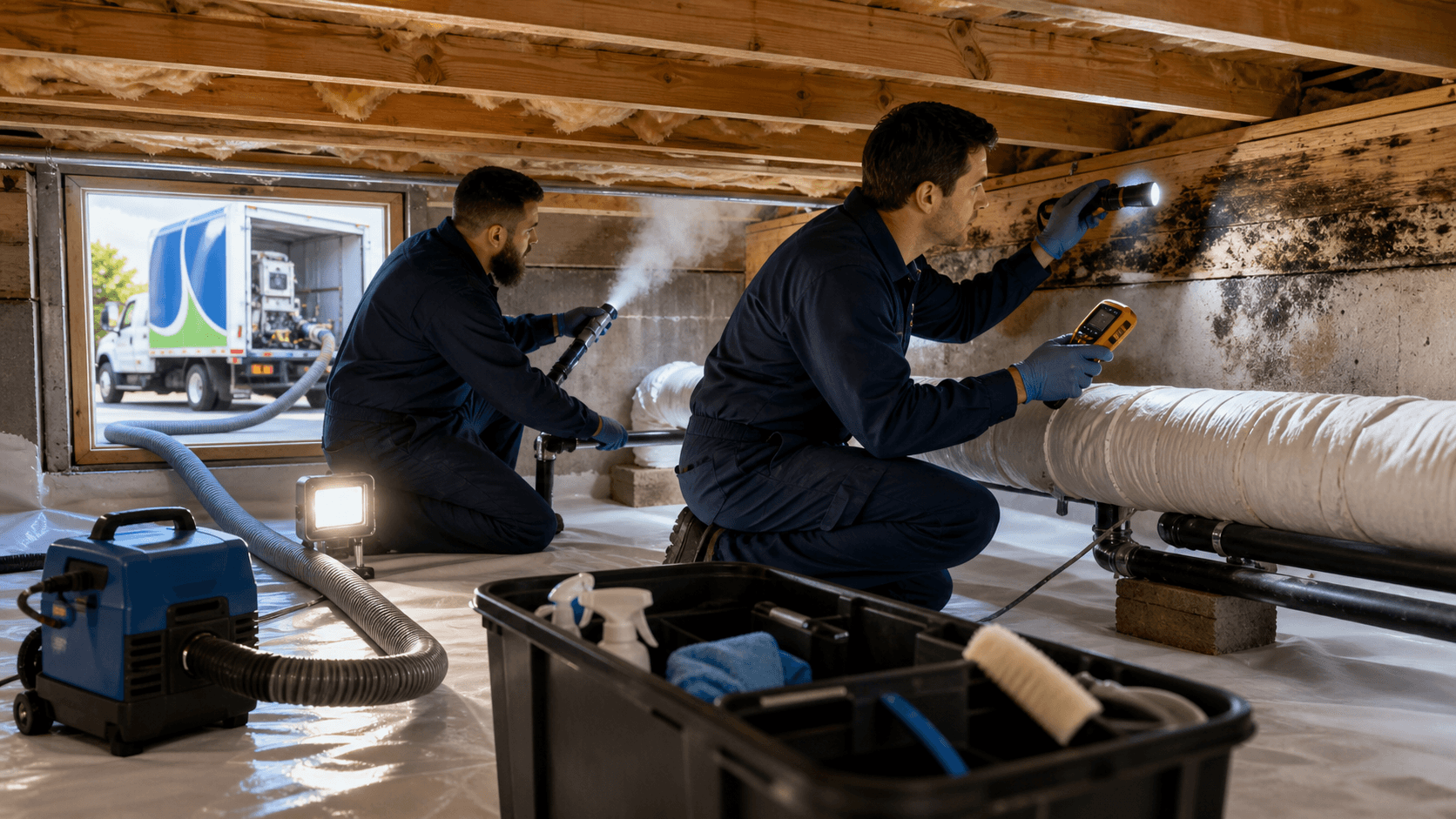
Standard kitchen mold removal in Winnetka usually includes a structured process. A professional team will inspect the area, set up containment to keep spores from spreading, remove visibly contaminated materials, run air filtration, and apply antimicrobial treatments to affected surfaces. If the moisture source is minor and damage is limited, this can be all you need.
However, remediation alone falls short when we uncover:
- Structural wood that has rotted or lost strength
- Mold spread across large sections behind cabinets and backsplashes
- Drywall damage across several walls, not just one small area
- Mold that comes back even after previous cleaning or spot repairs
As materials are opened up, we may also find issues tied to safety and modern codes. These can include outdated wiring in walls, subfloor damage around dishwashers or sinks, or insulation and vapor barriers that are missing or poorly installed. When this happens, stopping at basic mold removal would only treat the symptom, not the cause. A remodel-level project becomes the better way to fix the kitchen correctly and prevent repeat problems.
Signs You May Need a Full Kitchen Remodel
Not every mold job turns into a remodel, but there are clear signs that more than remediation may be needed. You may be looking at a larger project when:
- Mold is found under tile, hardwood, or laminate flooring, not just on top
- Base cabinets, toe-kicks, or cabinet backs are heavily contaminated
- Mold has spread into nearby rooms such as a dining room, mudroom, or pantry
- There are long-standing moisture issues along exterior walls or under windows
Health and lifestyle play a part too. If anyone in your home has asthma, allergies, or mold sensitivities, lingering contamination or half-done work is not worth the risk. Food safety and air quality are also major concerns when mold has been inside cabinets and wall cavities for a long time.
A remodel can feel disruptive, and it does affect how you use your kitchen. That is why timing matters. When mold is discovered toward the end of summer, some families choose to plan work for fall or winter. Cooler weather often means fewer outdoor events and can be a suitable time to coordinate schedules between restoration teams and remodeling contractors.
What a Mold-Driven Kitchen Remodel Really Involves
When mold damage leads into a remodel, the process is a blend of careful restoration and thoughtful rebuilding. A typical project may include:
- Detailed inspection and moisture mapping to find the true source
- Safe removal of contaminated drywall, flooring, insulation, and cabinets
- Containment and air filtration to limit dust and spores throughout the home
- Collaboration with your chosen contractor on layout, materials, and timing
- Final clearance testing before new finishes and cabinets are installed
Combining restoration with remodeling can often be a smart approach. Once walls and floors are open, it is a good time to:
- Upgrade plumbing lines, shutoff valves, and venting
- Improve kitchen ventilation with better exhaust options
- Add or improve insulation to reduce condensation on cold walls
- Choose mold-resistant drywall, paints, and flooring products
Minimizing disruption is always a goal. Temporary barriers and zipper doors can help separate the work zone from the rest of the house. Some families set up a simple temporary kitchen in another room with a small fridge, microwave, and basic supplies. Clear schedules and good communication among the restoration team, the contractor, and the homeowner help keep stress down while the work is underway.
How GreenStar HomePro Protects Your Investment
When kitchen mold becomes a serious concern, you want the space cleaned correctly and rebuilt on a solid base. At GreenStar HomePro, we handle water damage restoration, mold remediation, and floor and carpet cleaning for homes across the Chicago area, including Winnetka. We focus on careful inspections and detailed plans, especially when kitchens are involved.
Our role on remodel-level projects is to:
- Identify where moisture really started and how far it has spread
- Document visible damage for insurance adjusters and remodeling partners
- Remove mold-affected materials following industry standards
- Dry the structure thoroughly so new work is placed on a stable, dry frame
Once remediation is complete, we support long-term protection by suggesting helpful upgrades and habits. This may include better kitchen ventilation, routine checks for small leaks, caring for caulk and grout around wet areas, and choosing finishes that stand up better to humidity and daily spills. By addressing both the mold and the conditions that allowed it to grow, you can enjoy a fresh, healthy kitchen with more confidence in its future.
Protect Your Family With Safe, Professional Mold Removal Today
If you are seeing signs of moisture or discoloration in your kitchen, now is the time to act before the problem spreads. At GreenStar HomePro, we provide trusted kitchen mold removal in Winnetka to help restore a healthy home environment quickly and thoroughly. Reach out today and let our team inspect, treat, and help prevent future mold growth. If you are ready to schedule service or ask questions, simply contact us.