Stop Hidden Crawl Space Mold From Taking Over
Musty odors that seem stronger in the fall often start in the crawl space. Many Lake Forest homeowners notice a damp smell as the weather cools, then later discover mold spreading across wood, insulation, and even soil below the house. The surprise is not just how much mold there is, but where it has been hiding.
Crawl spaces in Lake Forest are under extra stress when temperatures drop and rain picks up. Vents get closed, air slows down, and moisture has nowhere to go. That trapped damp air hangs around under your home and gives mold the exact conditions it likes. The tricky part is that mold growth is often out of view, tucked behind insulation, on the underside of floors, or around pipes and ducts.
In this article, we will walk through the unexpected places mold hides in crawl spaces, what warning signs show up inside your living space, and why a careful, professional inspection is usually the safest way to handle crawl space mold removal in Lake Forest. When you know where mold likes to grow, you can stop small issues before they turn into major repairs.
Why Lake Forest Crawl Spaces Invite Hidden Mold
Living near Lake Michigan means moisture is always part of life. The air often holds a lot of humidity, and in the fall, cool nights and warmer days can create condensation under your home. When that moist air hits colder surfaces in an unconditioned crawl space, water can form on wood, pipes, and even plastic.
Many Lake Forest homes have older crawl spaces that were not built with modern moisture control in mind. Common features that make mold growth more likely include:
- Exposed soil or gravel that lets ground moisture rise
- Vents that are loose or poorly sealed
- Aging or sagging insulation that traps damp air
- Old vapor barriers that are torn or out of place
These pieces work together to create small "micro-climates" under your home. One corner might be fairly dry, while another spot near a downspout or plumbing line stays damp for weeks. Mold loves these dark, quiet pockets where air does not move much.
All of this affects the health and comfort of your home. Musty crawl space air can work its way up into living areas. People with allergies or asthma may notice more symptoms, and over time, dampness can weaken wood, damage flooring, and cause lingering odors that are hard to ignore.
Sneaky Mold Hotspots Above Your Head
Most people expect mold to show up on visible surfaces, but in a crawl space, a lot of growth happens overhead. The hidden side of your floors can be one of the biggest trouble spots.
Common mold locations above your head include:
- The underside of floorboards, especially near exterior walls
- Around floor joists and beams where dust and moisture collect
- Tight corners where insulation and wood meet
Water does not always drip down in big leaks. Slow, tiny leaks from kitchens, bathrooms, or laundry rooms can seep through the subfloor and reach the crawl space. Insulation batts or sound-deadening materials can hide this moisture and give mold a soft, protected surface to grow on. By the time stains show on the ceiling or flooring above, there may already be a large mold problem in the crawl space.
Inside the home, you may notice subtle clues that something is wrong underneath:
- Floors that feel unusually cold or damp in one area
- Localized squeaks or soft spots in certain rooms
- A faint musty smell near baseboards or floor vents
These signs do not always mean mold, but they are strong hints that you should have the crawl space checked by a mold professional before damage spreads.
Mold You Cannot See in Ducts, Pipes, and Wiring
Mechanical systems often run right through crawl spaces, and they can be quiet mold builders. Because ducts, pipes, and wires are usually tucked into corners or low-clearance areas, they are easy to overlook.
On the HVAC side, trouble spots include:
- Uninsulated or poorly wrapped ductwork that sweats in humid air
- Dust buildup inside ducts running through the crawl space
- Mold growth near floor registers and vents close to the crawl space
Plumbing can also be a slow source of moisture. Small drips that never reach your kitchen or bathroom floor can still soak beams and insulation below. Sweating pipes on cool days can leave surfaces damp, especially when combined with limited airflow. Sump pumps and dehumidifiers located in or near the crawl space can create splash zones or overflows if drains are not directed correctly.
Even electrical and cable lines can play a part. Openings where wires pass through the subfloor allow humid air to move up, and dark wire chases can hold moisture longer than open parts of the crawl. Mold can grow around these penetrations where dust, wood, and damp air mix.
This is why complete crawl space mold removal in Lake Forest should always include a detailed look at mechanical systems. Simply scrubbing visible wood or concrete does not solve the problem if ducts, pipes, and wiring areas are still harboring mold and moisture.
Hidden Mold in Soil, Insulation, and Vapor Barriers
When people think about mold, they often picture it on wood. In crawl spaces, it can also thrive on soil, insulation, and plastic materials.
Exposed soil or gravel in a crawl space is not just dirt. When groundwater rises during rainy periods or water from downspouts runs toward the foundation, that soil can stay damp for long stretches. Mold can colonize this surface, especially in shaded corners where air barely moves.
Old or damaged vapor barriers bring their own problems:
- Torn plastic that lets moisture come through unevenly
- Water trapped between soil and barrier, staying wet out of sight
- Leaves, wood scraps, and other organic debris caught underneath
As that debris breaks down, it feeds mold growth on both the soil and the underside of the plastic. Pulling up or shifting a barrier without proper safety gear can send spores into the air and up into your home.
Insulation is another common hiding place. Mold often develops:
- On the paper backing of fiberglass batts
- In gaps between pieces of foam board
- Where fallen insulation holds dampness against wood
Many homeowners try to wipe away what they can see and think the job is done. The trouble is that DIY cleaning often misses these layers and can disturb mold spores, spreading them deeper into the structure. A trained team knows how to find hidden colonies and remove them in a way that limits cross-contamination.
Fall Crawl Space Checkup and Next Steps
As weather cools and homes get closed up, crawl space conditions can quietly get worse. A simple visual check from the access door can help you spot early warning signs before winter makes the space even more closed off.
Things to look for include:
- Musty or earthy odors coming from floor vents or low walls
- Standing water, damp soil, or shiny wet spots on plastic
- Dark staining or streaks on joists, beams, or subfloor
- Sagging, fallen, or discolored insulation
- Rust spots on metal ductwork or brackets
- Condensation beads on pipes or around mechanical equipment
If you see any of these signs, or if your home has a history of water in the crawl space, it is time to think about a professional assessment. For Lake Forest homeowners, GreenStar HomePro focuses on restoration and deep cleaning services, including mold remediation and water damage work. Our team understands how local weather and older crawl space designs work together to create hidden mold issues.
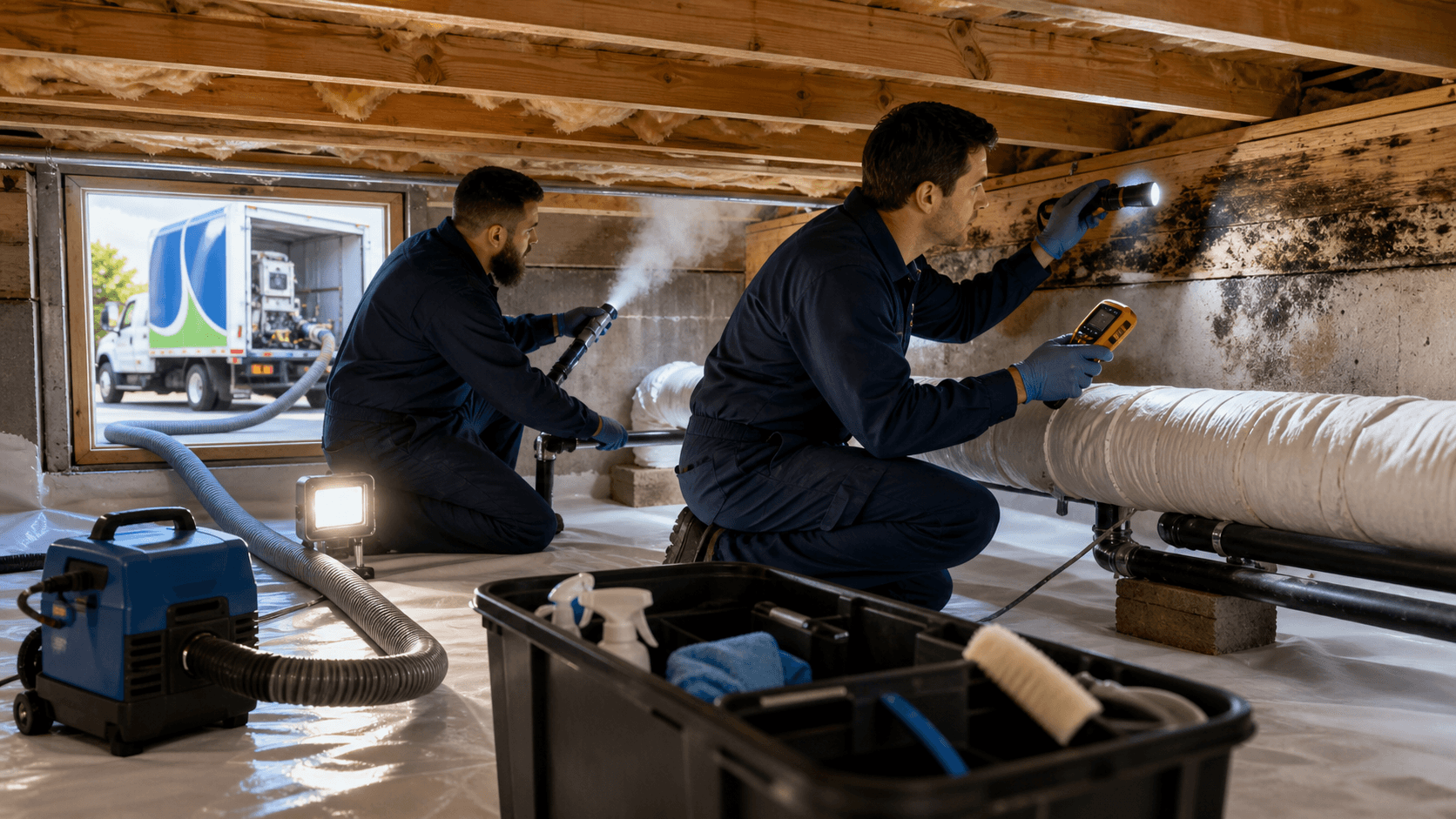
During crawl space mold removal in Lake Forest, we start by finding where the moisture is coming from, then carefully remove mold growth and deal with affected materials. From there, longer-term steps such as improving drainage, sealing gaps, and adding proper encapsulation or dehumidification can help keep the space dry and stable. When your crawl space is under control, the air in your home smells cleaner, floors feel better, and you gain peace of mind knowing mold is not hiding just out of sight.
Protect Your Home With Professional Crawl Space Mold Removal Today
If you are seeing signs of moisture or musty odors, our team at GreenStar HomePro is ready to help restore a safer environment in your home. Learn how our specialized crawl space mold removal in Lake Forest can eliminate hidden growth before it spreads further. Reach out today to discuss your concerns and schedule an inspection, or contact us with any questions about your specific crawl space issues.