When Garage Mold in Evanston Becomes an Emergency
Garage mold does not always show up as a huge black patch on the wall. Many Evanston homeowners first notice a light musty smell, a few dark spots near the floor, or some fuzzy growth on old boxes stacked in the corner. After a wet summer on the North Shore, it can feel like "just a little moisture" that can wait until you have more time.
The problem is that garages in our area are almost perfect for mold. Temperatures swing from hot to cool, lake-effect humidity hangs in the air, and snow-covered vehicles and wet boots drip onto the floor for months. Cardboard boxes, wood shelves, stored furniture, and old rugs soak up this moisture like sponges. That hidden dampness is what lets mold spread quietly behind the scenes.
We want you to know how to spot the warning signs that garage mold removal in Evanston cannot be pushed off. Acting early protects your home, helps protect your family's health, and keeps mold from chewing away at your property value. As a family-owned & operated company for more than 50 years over three generations, we have been helping Chicago-area homeowners with problems like this for decades, and we have seen how fast a "small" mold problem can turn into a big one when it is ignored.
Silent Warning Signs Your Garage Mold Is Spreading
Often, mold trouble in a garage starts small and silent. By the time the signs feel obvious, the growth may already be hiding inside walls or under stored items.
Some visual clues you should never ignore include:
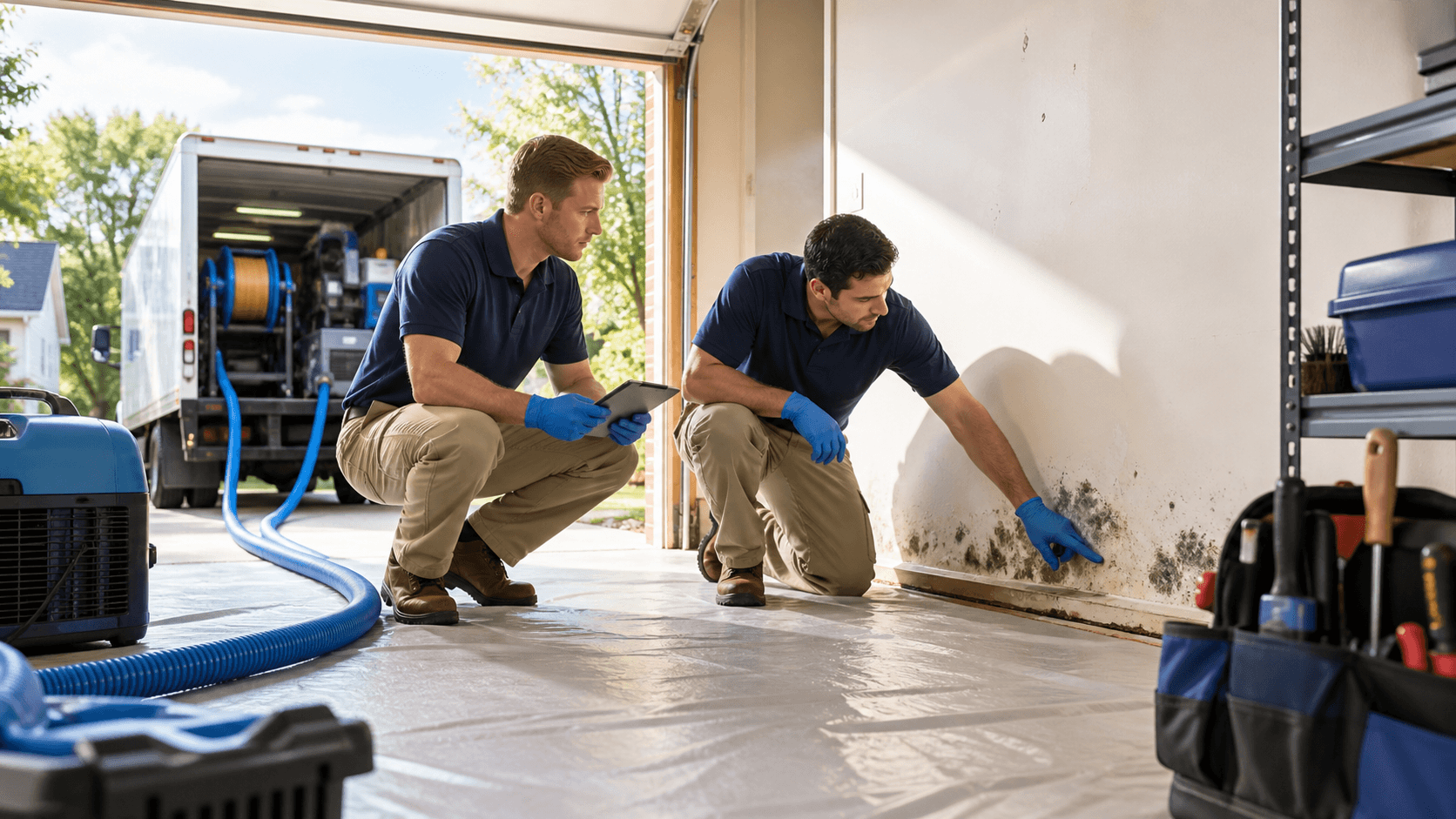
- Dark, greenish, or gray patches slowly expanding on drywall or the ceiling
- Fuzzy white or green growth on wood shelves, cardboard boxes, or stored furniture
- Peeling paint, bubbling finishes, or stained areas that keep coming back
- Black dots or streaks on the bottom of doors, trim, or baseboards
Your senses can tell you a lot too. Pay attention if you notice:
- A musty, earthy odor that stays even after you sweep or open the door
- A slightly damp, clammy feel in the air even when it has not rained
- A fine, extra "dust" on items that seems to return quickly
Health changes around the same time can be another red flag. Mold in a garage can affect air that drifts into the house, especially near connecting doors. Be cautious if family members notice:
- Sudden or worsening allergies after spending time near the garage
- Coughing, sinus pressure, or headaches that seem stronger when you are in that area
- Asthma or breathing issues that flare up when using the garage as a workout or hobby space
These subtle signs often mean mold is not just on the surface. It can be growing inside wall cavities, around previous water damage, or in insulation. Wiping visible spots with a store cleaner might make the stain lighter, but it will not stop mold that is already feeding on hidden materials.
When Garage Mold Removal in Evanston Can't Wait
Some situations call for fast, professional attention, not a "wait and see" approach. In our climate, moisture moves quickly from summer storms to fall rains to early wet snow, so mold can spread between seasons.
Garage mold removal in Evanston should not wait when you notice:
- Mold growth after heavy rain, a roof leak, or water seeping under the garage door
- Visible mold near the doorway that leads into your home
- Mold on or around HVAC equipment, ducts, or vents in or near the garage
- Mold on insulation, stored baby gear, pet supplies, or items you bring into the house
Watch for structural and safety warning signs too:
- Sagging or warped drywall on ceilings or walls
- Soft or rotting wood around garage doors, frames, or support beams
- Rust forming on metal tools, shelving, or door tracks from trapped moisture
- Insulation that looks matted, damp, or discolored instead of dry and fluffy
Health concerns raise the urgency even higher. If anyone in the home is pregnant, elderly, has asthma or other breathing issues, or has a weakened immune system, it is especially important to address mold quickly. The same goes if kids or teens use the garage as a play area, workout zone, or music space. In those cases, garage mold should be treated as a same-week priority.
As fall settles in and windows stay closed longer, air from the garage can more easily carry spores into living spaces. Waiting until winter or "next spring" gives mold time to spread into the areas where you spend most of your time.
Why DIY Garage Mold Cleanup Often Makes Things Worse
Mold in a garage can look like a simple cleaning job, but home methods often cause more trouble than they solve. It is easy to underestimate how far mold has reached or how sensitive spores are when disturbed.
Store-bought cleaners and home remedies might:
- Lighten the stain but leave live mold in porous materials
- Miss moisture that is soaked into studs, insulation, or the slab
- Do nothing for spores that are already settled in dust and on stored items
Improper handling is another big risk. Common DIY mistakes include:
- Scrubbing dry mold and sending spores into the air
- Using a regular household vacuum that blows spores through the exhaust
- Pulling out moldy drywall or insulation without sealing off the area
All of these can spread mold into the rest of the garage, into nearby rooms, or into the HVAC system. Homeowners also often skip moisture testing, so they do not realize that roof problems, siding gaps, or gutter issues are feeding the mold from outside.
A careful professional approach uses steps like:
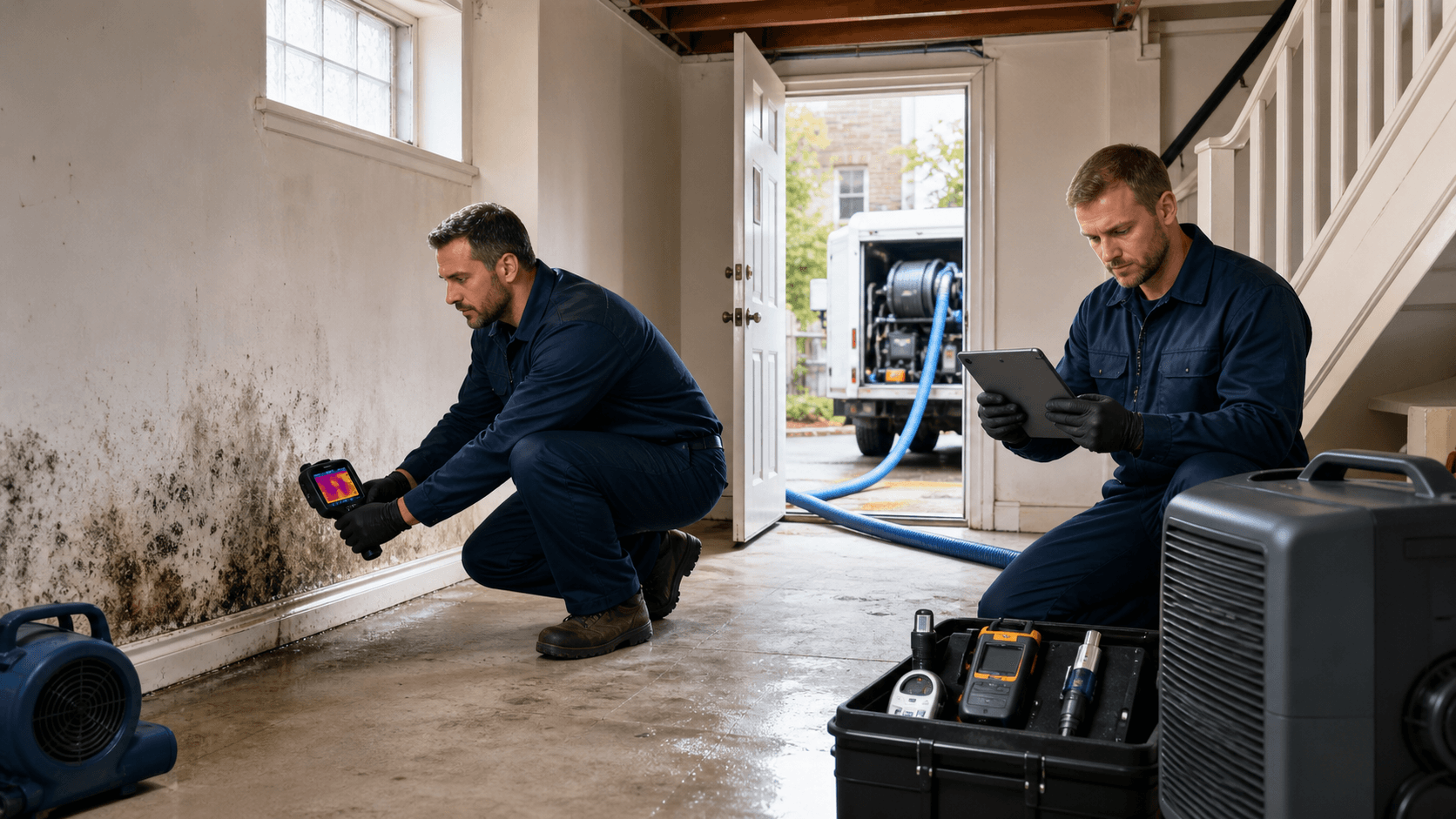
- Setting up containment to keep spores from drifting into the home
- Running HEPA filtration to help capture airborne particles
- Checking moisture levels in building materials
- Following clear remediation methods to remove damaged materials and clean surfaces
That kind of process helps make sure the mold is addressed at the source, not just wiped from the surface.
How a Family Restoration Team Protects Your Garage and Home
Garage mold can feel overwhelming, especially when you are worried about stored belongings, tools, and family health. This is where a steady, experienced team makes a difference.
As a family-owned & operated company for more than 50 years, now in our third generation, we have spent many years working in garages, basements, and living spaces across Evanston and the Chicago area. Our approach is hands-on and clear, so you know what is happening at each step.
A typical garage mold removal project in Evanston often includes:
- An on-site inspection of visible mold and any past or present water issues
- Moisture and damage assessment to see how deep the problem goes
- A simple explanation of what we find and what it means for your garage
- A written plan for containment, removal, and cleaning
- Careful removal of damaged materials, followed by cleaning and air filtration
- A final check to confirm that mold and moisture have been properly addressed
Because we are a multi-generation family team, homeowners get consistent communication and familiar faces, not a different crew each time. We respect that a garage often holds important keepsakes along with everyday gear. When mold reaches stored items, we talk through options, what may be cleaned, and what may be too damaged to keep.
We also handle related water damage restoration and deep cleaning. That means we can help you move from a damp, moldy garage to a cleaner, more usable space before cold weather and snow bring even more moisture in on your car and boots.
Act Now to Get Your Evanston Garage Winter Ready
As cooler nights and more frequent rain arrive, garages in Evanston see more moisture and less fresh air. Snow, slush, and road salt will soon be coming in on every vehicle. This is a good time to do a quick self-check of your garage so small mold issues do not turn into big winter headaches.
Walk through your space and:
- Look for new stains, spots, or fuzzy patches on walls, ceilings, and stored items
- Smell for musty or earthy odors that do not go away
- Feel for damp areas near doors, along the slab, or around stored boxes
If anything feels off, do not wait for spring cleaning. Early, professional garage mold removal in Evanston helps protect your health, your home's structure, and the tools, sports gear, and family storage that often live in the garage. A clean, dry garage from a family-owned & operated company for more than 50 years and three generations makes it easier to get through a long Chicago winter with one less worry hanging over your head.
Protect Your Evanston Home From Hidden Garage Mold Today
If you are ready to stop worrying about recurring mold and musty smells, let GreenStar HomePro handle your garage mold removal in Evanston with a proven, professional approach. We inspect, remediate, and help address the moisture issues that cause mold so your garage stays cleaner and healthier for the long term. Reach out today to tell us about your situation and schedule a convenient appointment, or contact us with any questions before you get started.