Stay Safe and Take Control After a Severe Storm
Storms that roll through Long Grove and the greater Chicago area can tear through a neighborhood in minutes, leaving behind water damage, roof leaks, and scattered debris. High winds can rip off shingles, topple trees, and drive rain into tiny openings that quickly become big problems. Even if your home looks mostly fine from the street, hidden moisture and minor structural damage can turn into serious repairs if they are not handled quickly.
Safety always comes first. After a storm, damaged power lines, unstable roofs, broken glass, and contaminated floodwater can all put your family at risk. Having a clear storm damage restoration checklist gives you a way to act without guessing, so you can avoid dangerous situations, protect your belongings, and know when to bring in professional help for disaster restoration in Long Grove. In this guide, we focus on wind damage, roof leaks, and severe weather cleanup, with practical steps you can follow and clear signs that it is time to call trained restoration specialists like our team at GreenStar HomePro.
First 60 Minutes After the Storm Passes
The first hour after a storm often makes the biggest difference in how much damage your home or business will suffer. Once the weather is calm and it is safe to step outside, start with a careful visual check.
From the outside, without entering unsafe areas, look for signs like:
- Downed or sagging power lines near your property
- Broken glass around doors, windows, and vehicles
- Tree limbs on the roof or leaning against the structure
- The smell of gas or a hissing sound near the meter
If you see downed lines, strong gas odors, or major structural damage, get everyone away from the area and contact emergency services. Do not try to move lines, and do not turn electrical equipment on or off if there is any chance of live current or gas leaks.
Next, document what you can safely see. Use your phone to take wide shots of the property and closer photos of:
- Roof surfaces that look lifted or torn
- Damaged siding, gutters, and downspouts
- Broken fences, decks, and outdoor structures
- Flooded areas of the yard or driveway
Avoid climbing on the roof or using ladders if the ground is wet or the structure looks questionable. Your safety matters more than getting a closer photo.
Inside, protect what you can in a few simple steps:
- Move electronics, rugs, and furniture away from active leaks
- Place buckets or containers under dripping ceilings or window frames
- If you can do it safely, shut off water to a leaking pipe or fixture
- Consider switching off electricity to rooms with standing water
Quick action in this window can slow mold growth, keep ceilings from collapsing, and save flooring from permanent damage. When you see significant water on floors, multiple leaks, or flooding from outside, calling for emergency disaster restoration in Long Grove is often the smartest move, because professional equipment and fast structural drying can stop small problems from spreading.
Checking for Roof Leaks, Wind Damage, and Water Intrusion
Once things are stable and secure, it is time to look more closely at how the building itself held up. Start with the roof and exterior, but stay on the ground.
- Missing, curled, or twisted shingles
- Metal flashing that appears bent or lifted at chimneys and vents
- Gutters that are pulled away or packed with branches and leaves
- Loose or cracked siding panels
- Gaps or cracks around window and door frames
- Damage to soffit and fascia boards under roof edges
Inside, walk through every room, including the attic and basement, with a flashlight. Signs of leaks and water intrusion can include:
- Brown or yellow stains on ceilings and upper walls
- Bubbling, peeling, or blistering paint and wallpaper
- Sagging drywall on ceilings or around window openings
- Damp or squishy carpet, especially near exterior walls
- Musty odors in closets, crawlspaces, and storage rooms
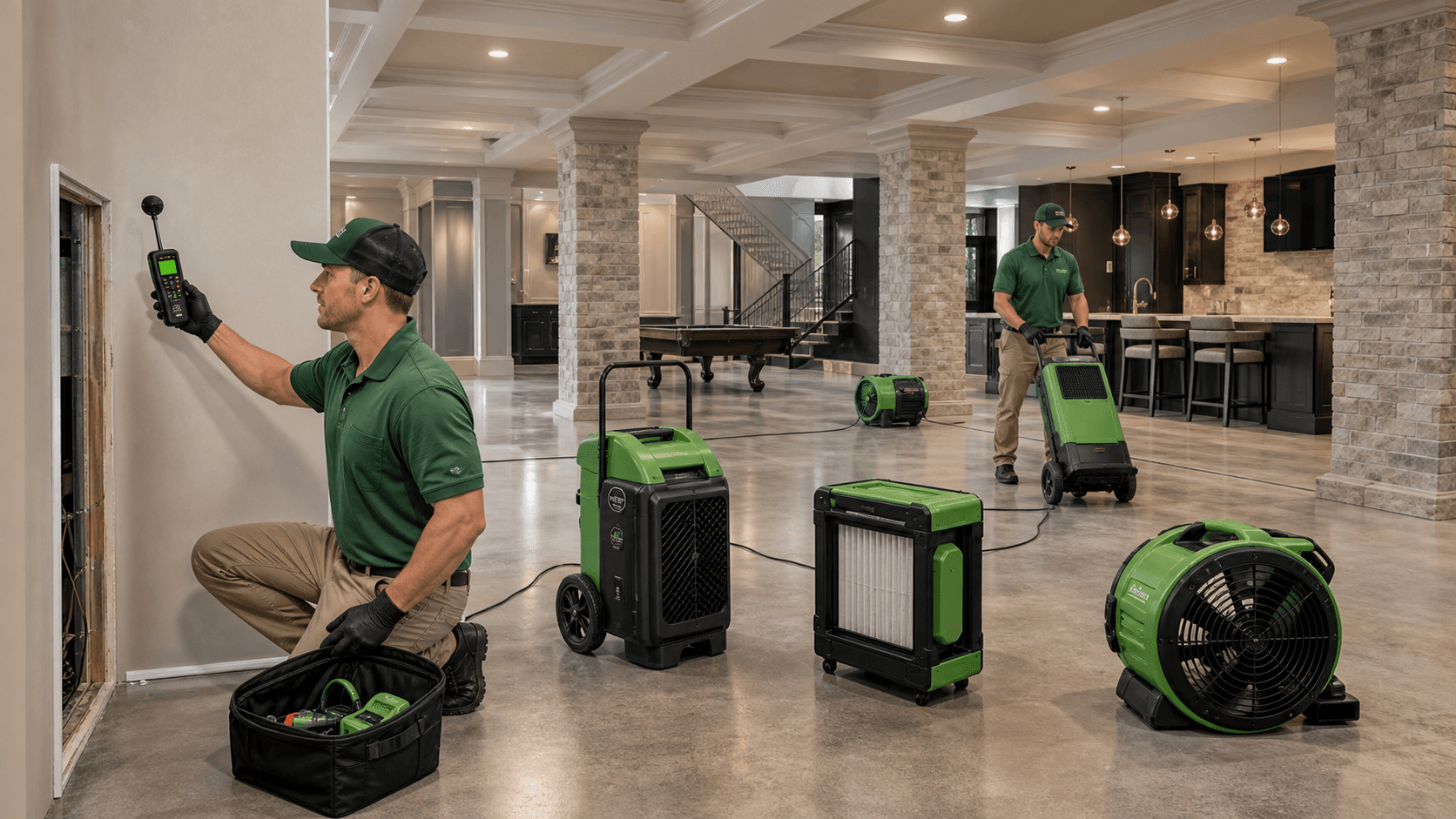
Water does not always show up directly under the hole in the roof. It can travel along rafters, inside insulation, and behind drywall before it appears somewhere unexpected. That is why professional tools like moisture meters and thermal imaging cameras are so valuable. At GreenStar HomePro, we rely on this type of equipment to find moisture inside walls and floors that the eye cannot see.
A tiny, one-time drip that dries quickly might be something you monitor while scheduling a repair. On the other hand, steady dripping, multiple stains, or soft spots in ceilings and floors can signal serious structural or mold risk. In those cases, it is wise to bring in trained technicians for disaster restoration in Long Grove, so moisture is located, removed, and documented correctly.
Essential Storm Cleanup and Temporary Repairs
When you are ready to start cleaning up, move slowly and think safety first. Many injuries after storms come from rushing.
For safe debris removal:
- Wear heavy gloves, boots, and long sleeves
- Watch for nails, screws, and sharp metal fragments
- Keep children and pets away from affected areas
- Avoid moving large tree limbs resting on the house until they are inspected
Hold off on throwing away damaged materials like carpet, furniture, or roofing until you speak with your insurance company. They may want photos or an in-person inspection before anything is discarded.
Controlling water and moisture is the heart of storm restoration. If it is safe to work, you can:
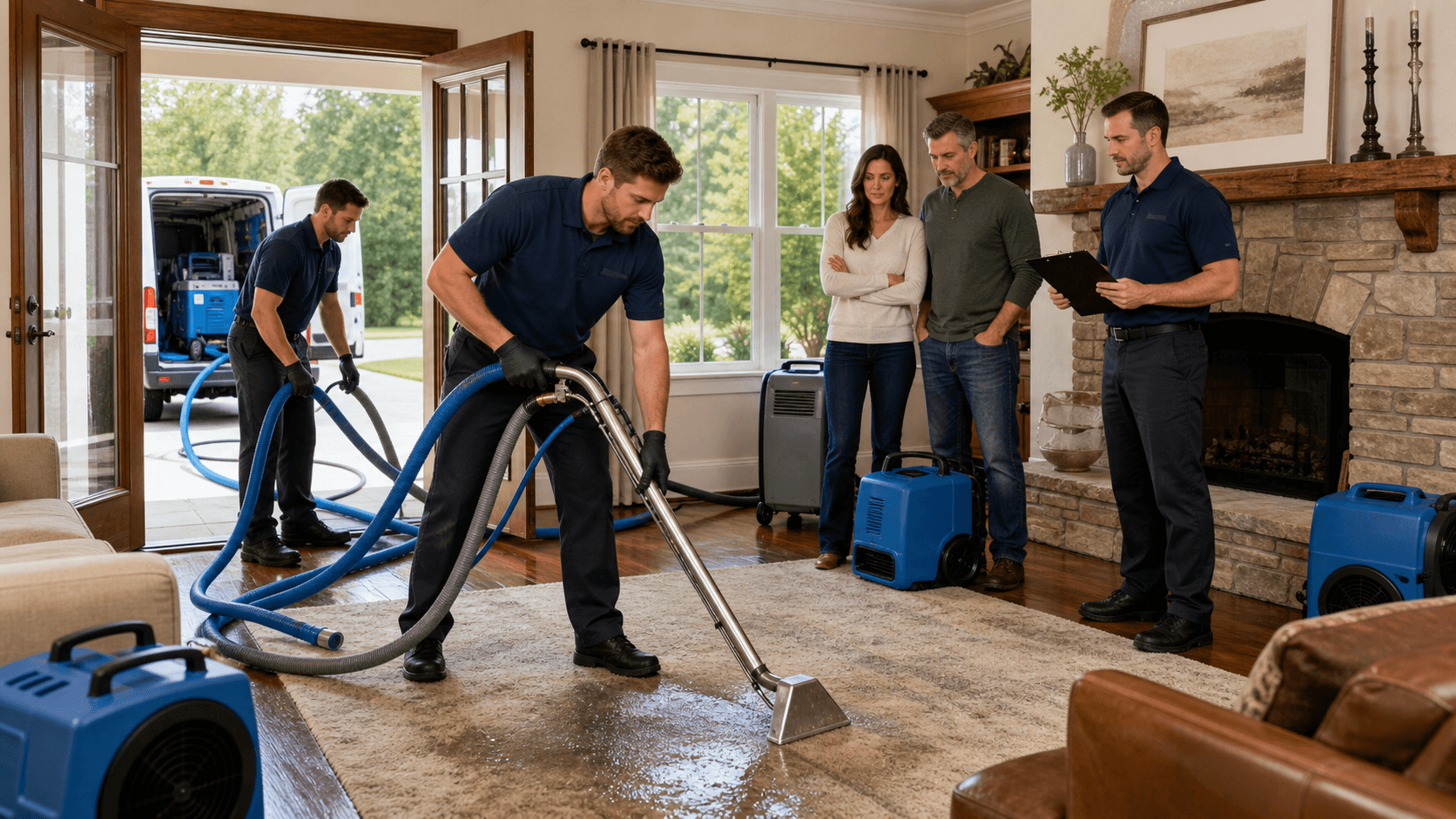
- Use a wet vacuum to pull standing water off hard surfaces
- Remove small area rugs and set them aside to dry
- Place aluminum foil or blocks under furniture legs to keep them off wet floors
- Open interior doors and, when the weather allows, some windows for airflow
- Run fans and household dehumidifiers to help pull moisture from the air
For temporary containment, basic supplies can make a big difference:
- Tarp damaged sections of roofing to reduce new water entry
- Secure loose siding with temporary fasteners where possible
- Board up broken windows to keep out rain and trespassers
- Block off rooms with sagging ceilings or soaked flooring so no one enters
DIY efforts are often enough for small, shallow leaks that are caught quickly. When you see deep water, soaked drywall, or water in insulation, you are dealing with a problem that usually calls for commercial-grade drying equipment and trained eyes. Professional restoration crews can dry spaces more thoroughly and help prevent long-term issues like mold growth and weakened framing.
Insurance, Professional Help, and Preventing Future Damage
Once the immediate mess is under control, the focus shifts to repairs, insurance, and reducing the chances of a repeat problem next time storms roll through Lake County.
To work smoothly with your insurance company:
- Keep all photos and videos organized by room or area of the property
- Save receipts for emergency supplies, temporary repairs, and cleanup services
- Write down dates, times, and notes about what happened and when you noticed each issue
- Do not discard major damaged items until an adjuster has documented them
When you are choosing a storm restoration partner, it helps to look for:
- A professional company that focuses on restoration and cleaning
- Clear information about services and response times
- Experience with local weather patterns and building styles in the Chicago suburbs
- Detailed, written estimates that explain what is included
At GreenStar HomePro, we provide water damage restoration, structural drying, mold remediation, carpet cleaning, and related home services for both residential and commercial clients. We also respond to roof leaks and severe weather events with full-service cleanup and coordinated restoration, so properties can be brought back to a safe, clean condition.
To help prevent future damage, consider simple maintenance steps such as:
- Scheduling regular roof inspections to catch wear before it becomes leaks
- Cleaning and maintaining gutters and downspouts so water moves away from the foundation
- Trimming branches that hang over the house or power lines
- Sealing gaps around windows and doors to reduce wind-driven rain intrusion
- Creating a family storm response checklist with roles and emergency contacts
Restore Your Home and Peace of Mind with Expert Help
Storms can feel overwhelming, but a clear checklist gives you a way to act with purpose instead of panic. By staying safe, documenting damage, checking for leaks and water intrusion, and tackling careful cleanup and temporary repairs, you can limit long-term costs and stress. Knowing when a situation calls for professional disaster restoration in Long Grove helps you protect both your property and your health.
Many homeowners and business owners find it helpful to print a version of this checklist and keep it with their emergency supplies, insurance information, and important documents. With the right steps, and support from experienced restoration professionals when you need it, you can move from storm damage back to a home that feels secure, comfortable, and ready for whatever the weather brings next.
Restore Your Home's Comfort And Safety Now
When disaster strikes, you should not have to wait to get your home clean, safe, and livable again. Our team at GreenStar HomePro is ready to provide reliable disaster restoration in Long Grove tailored to your property's specific needs. Reach out today so we can assess the damage, walk you through your options, and start a clear plan for recovery. If you are ready to talk with a specialist, simply contact us and we will respond promptly.