Protect Your Home and Health After a Sewage Backup
Sewage backing up into a basement or bathroom is more than a messy inconvenience; it is a serious health and property emergency. Unlike clean water from a pipe leak or minor appliance overflow, sewage is considered black water, heavily contaminated with bacteria, viruses, parasites, and chemical pollutants. That contamination can soak into building materials, linger in the air, and trigger long-term issues if it is not handled correctly.
In our Chicago area communities, including neighborhoods that often need flood restoration in Lake Zurich, sewage backups commonly happen when heavy rain overwhelms municipal systems. Other frequent causes include tree roots invading older sewer lines, broken or sagging pipes, clogged main lines, and failed sump pumps or ejector pumps that can no longer keep up. When that happens, toilets, floor drains, tubs, and basement drains can all push contaminated water back into your living space.
This kind of event brings real health risks. Exposure to sewage can lead to gastrointestinal illness, skin infections, respiratory irritation, and rapid mold growth. The longer the water sits, the worse the contamination and odor become, and the more materials are damaged beyond repair. As a local restoration company, we help homeowners and businesses respond quickly so they can protect both their health and property value.
Assessing the Damage Safely Before You Step in
Before anyone rushes into a flooded basement or sewage-covered bathroom, safety has to come first. Even shallow standing water can hide electrical hazards, structural problems, and sharp debris, especially in finished spaces.
Start with these immediate safety steps:
- Switch off power to affected rooms at the breaker if it is safe to reach it without walking through water.
- Keep children, pets, and anyone with asthma, severe allergies, or a weakened immune system away from the area.
- Avoid direct contact with sewage water and contaminated surfaces, and do not track it through the rest of the home.
Certain signs mean the situation is too severe for DIY cleanup and should be handled like a full water damage emergency, similar to cases that require flood restoration in Lake Zurich and nearby suburbs. Warning signs include:
- More than a small area affected, or water spreading into multiple rooms or levels.
- Deep standing water you cannot see through.
- Strong sewage odors throughout the home, not just in the affected room.
- Sewage backing up through several fixtures at once, such as floor drains plus toilets or tubs.
Before any cleaning starts, it is helpful to document the damage for your insurance company. Take clear photos and short videos from multiple angles. Capture water lines on walls and furniture, damaged flooring, cabinets, and personal items, and close-ups of obvious contamination, such as solids on surfaces. Make a simple list of damaged belongings as well, including approximate age and value if you know it. In larger incidents, it is wise to contact a professional restoration team immediately so they can perform a formal assessment and help you avoid unsafe conditions.
Step-by-Step Sewage Cleanup in Basements and Bathrooms
If the affected area is small and you choose to handle some cleanup yourself, proper protective gear is non-negotiable. At minimum, you should have:
- Waterproof boots with good traction.
- Heavy, waterproof gloves that cover your wrists.
- An N95 or better respirator or mask.
- Eye protection, such as safety glasses or goggles.
- Disposable coveralls or old clothing that can be thrown away.
Water removal must be done carefully. Only use wet vacuums that are rated for contaminated water, and never plug tools into outlets that may have been affected by the flood. Portable pumps can help in deeper areas, but the water should be discharged into an appropriate sanitary sewer connection if allowed, not into sinks, tubs, or clean drains that could spread contamination.
Separating materials is one of the hardest parts emotionally and practically. As a general rule, hard, nonporous surfaces such as tile, sealed concrete, metal, and many plastics can often be cleaned and disinfected. Semi-porous structural elements, like some framing and subfloors, may be saved if drying starts quickly and contamination is not extreme. Porous materials, including carpets, padding, most upholstered furniture, cardboard, insulation, and many textiles that were in direct contact with sewage, usually need to be discarded.
Basement sewage backups are often more complicated than bathroom spills. Basements may have floor drains that indicate a problem with the main sewer line, finished walls and ceilings that hide contaminated insulation or framing, and stored belongings in cardboard boxes, which absorb contaminated water quickly.
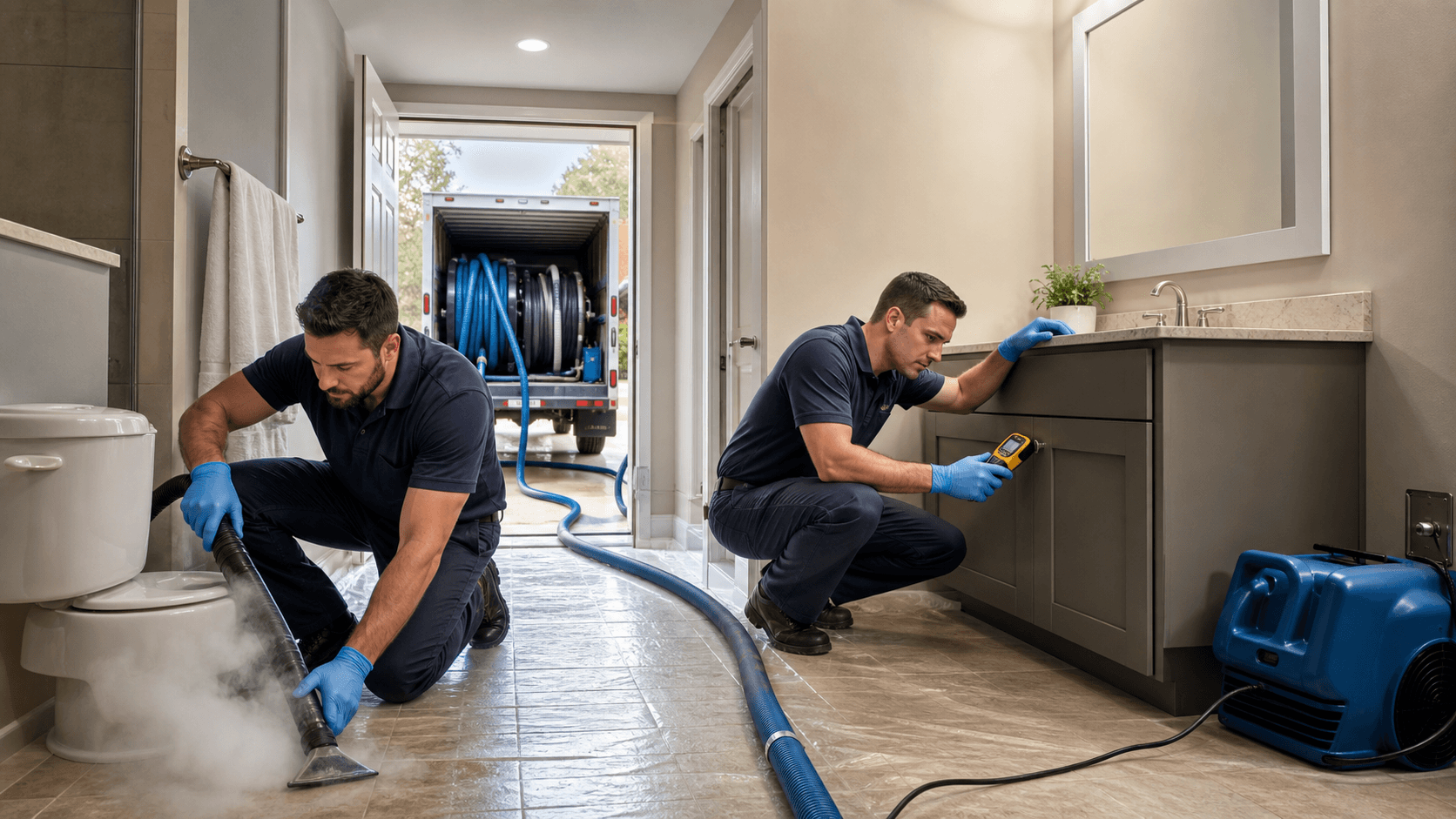
Bathrooms present their own challenges, particularly if sewage gets beneath tile, into the cavity behind the tub or shower, or under a vanity cabinet. If contamination reaches wall cavities or subfloors, professional help is typically needed.
Disinfection, Drying, and Odor Removal That Actually Works
A common mistake is spraying disinfectant over visible sewage, then mopping and calling the job done. In reality, effective cleanup follows a specific order:
- Remove all solids and debris first with shovels, scrapers, or disposable tools.
- Wash surfaces with a general detergent solution to lift soil and organic matter.
- Rinse if appropriate, then apply an EPA-registered disinfectant labeled for sewage or black water contamination, following the contact time on the label.
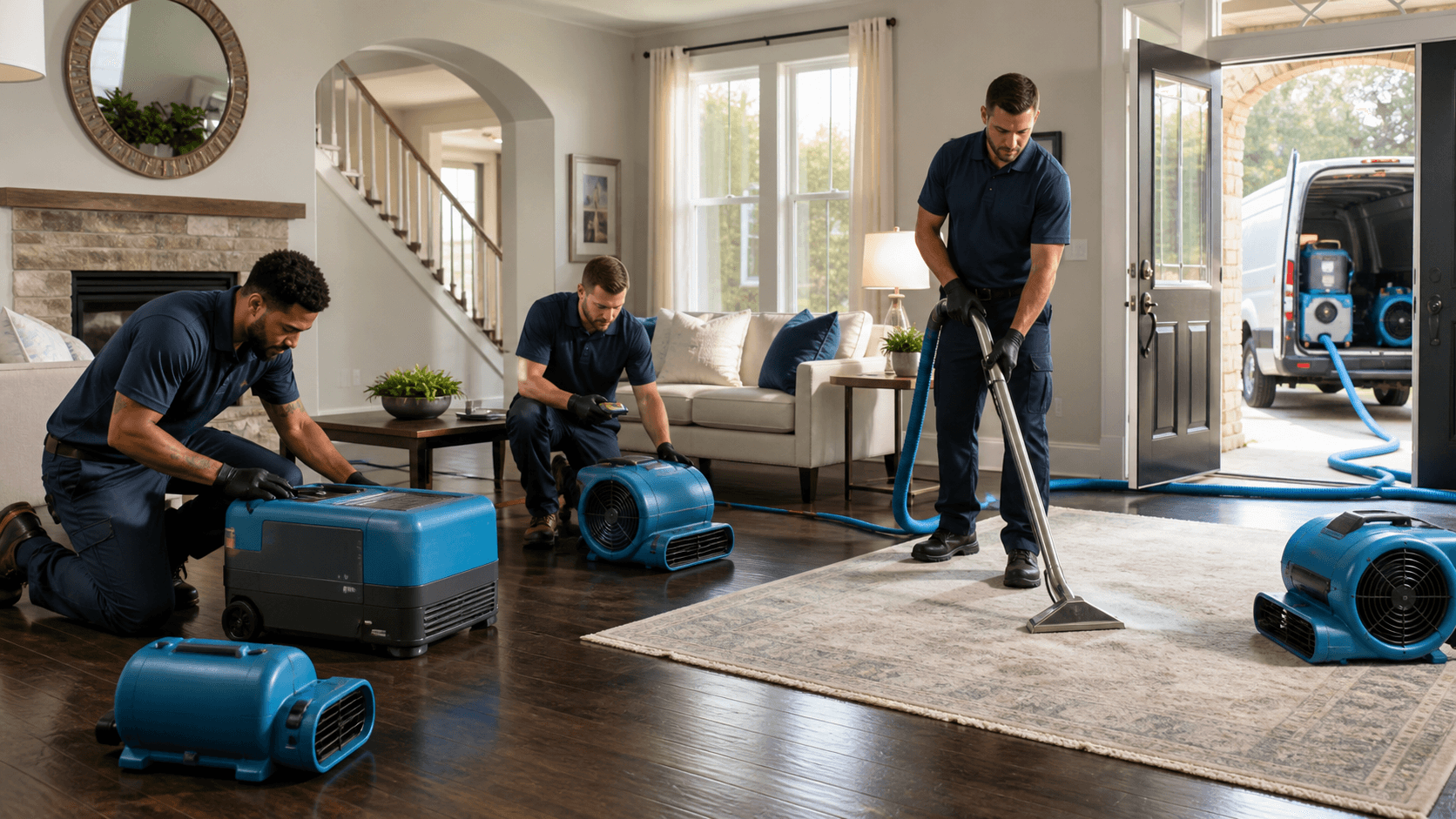
Once surfaces have been cleaned and disinfected, the space needs thorough drying to prevent mold and additional damage. Professional-grade equipment makes a big difference here. We use:
- High-velocity air movers to keep air circulating across wet surfaces.
- Dehumidifiers to pull moisture from the air so materials can dry faster.
- Moisture meters to check inside walls, under flooring, and in subfloors.
Lingering odors after cleanup are a red flag. Persistent smells can indicate moisture still trapped inside walls or under flooring, saturated insulation or padding that was not removed, or contaminated dust in HVAC ducts if the system was exposed. Odor control is a standard part of broader water damage and flood restoration in Lake Zurich and the rest of the Chicago suburbs. Addressing the source, not just covering it up with fragrances, is key for long-term comfort and indoor air quality.
When to Call the Pros and How GreenStar HomePro Helps
Some sewage backups are simply too risky or complex for DIY efforts. You should strongly consider professional help if:
- More than a few square feet are contaminated, or multiple rooms are involved.
- The water has been sitting for many hours before you discovered it.
- Sewage reached HVAC equipment, ductwork, or wall cavities.
- Occupants include young children, elderly adults, or anyone with respiratory issues or a compromised immune system.
- Backups have happened more than once, suggesting a deeper plumbing or drainage problem.
A professional sewage cleanup team can bring tools and training that are hard to match on your own. Services typically include:
- Detailed moisture inspections with advanced detection tools to find hidden wet areas.
- Structural drying plans tailored to your home's construction.
- Advanced cleaning and disinfection methods focused on high-risk contamination.
- Safe removal and disposal of unsalvageable materials according to local regulations.
- Mold prevention steps that reduce the odds of future growth after a backup.
At GreenStar HomePro, we also understand how stressful the insurance side of the situation can be. We document the loss conditions, keep records of the work performed, and communicate clearly so you have organized information to share with your insurance carrier. Our team regularly responds to water damage and flood emergencies in Lake Zurich and across the Chicago area, so we are familiar with local building styles and common plumbing issues.
Restore Safety and Comfort with a Proactive Recovery Plan
Sewage backups are unpleasant, but you are not powerless. Protecting your home and health comes down to a few key principles: act quickly, stay safe, clean and disinfect thoroughly, and ensure the structure is completely dried. When those steps are followed, you can avoid a lot of the long-term problems that often follow contaminated water incidents.
There are also practical ways to lower your risk in the future:
- Schedule periodic sewer line inspections, especially in older homes or those with large trees nearby.
- Ask a trusted plumber about backwater valves that can reduce the chance of sewage flowing back into your home during heavy rain.
- Maintain sump pumps and ejector pumps, and consider battery backup systems so they run during power outages.
- Dispose of grease, wipes, and hygiene products properly, and avoid flushing anything labeled non-flushable.
Creating a basic emergency plan before something happens can make a stressful event easier to manage. Keep important phone numbers handy, know where your main water shutoff and electrical panel are located, and decide in advance who in your household will handle which tasks. When sewage or flooding does occur, having a trusted professional team like GreenStar HomePro in mind can help you move from chaos back to a clean, healthy home more quickly.
Get Started With Your Project Today
If you are facing water damage, our team at GreenStar HomePro is ready to guide you through every step of professional flood restoration in Lake Zurich. We act quickly to assess the damage, protect your property, and begin restoring your home so you can get back to normal sooner. Reach out today through our contact page to schedule an inspection or request emergency help.