
When the Smoke Clears: Why the First 24 Hours Matter
After a fire, the damages do not stop when the flames go out. Soot, smoke, and firefighting water keep working against your home or business, etching into surfaces, absorbing into fabrics, and spreading odors through every room. The first 24 hours are when you can either limit that damage or unknowingly let it get worse.
In that first day, it helps to understand what is safe to do yourself and what calls for certified professionals. For homeowners and business owners who need disaster restoration in Long Grove, quick, informed decisions protect your health, your property, and your insurance claim. At GreenStar HomePro, we are a family-owned, licensed, insured, IICRC-certified (Institute of Inspection Cleaning and Restoration Certification) restoration and cleaning company, and our team has spent three generations helping Chicago-area families recover from fire, smoke, and related disasters. We have also received the Carpet and Rug Institute Seal of Approval as well as the Clean Trust Certification from the IICRC, and all our technicians are certified and licensed.
Safety First Before You Reenter the Property
Before you step back inside, your priority is safety. Even a small fire can weaken structures, leave hidden hot spots, or create electrical hazards that are not obvious at first glance. Always wait for the fire department to officially clear the property for reentry, and ask specific questions about structural stability and utilities.
Coordinate with on-site responders or local inspectors on these points:
- Confirm if the structure is safe to enter or if any areas must stay off-limits
- Verify that gas, electric, and water are shut off where needed
- Ask about any known hot spots, sagging ceilings, or damaged stairways
- Check whether the property is secure from weather or trespassers
When you do go inside, protect yourself. Wear sturdy, closed-toe shoes or boots, work gloves, and at least a quality dust mask or respirator so you are not breathing in soot and ash. Try not to track debris through the property, especially into rooms that appear less affected.
There are also some important things you should not do in those first hours:
- Do not turn on electrical appliances or lights, especially if they were exposed to heat, smoke, or water
- Do not use ceiling fixtures in rooms where the ceiling is wet or sagging
- Do not wipe or scrub heavy soot from walls, furniture, or artwork, since this can smear residues and make cleaning harder
- Do not eat food or use medications that were exposed to heat, smoke, or firewater
Calling Certified Help and Documenting the Damage
Once everyone is safe and the fire is out, the clock starts on limiting secondary damage. Soot can corrode metals, stain surfaces, and embed deep into porous materials. Water from firefighting can lead to mold and structural issues. For disaster restoration in Long Grove, calling an IICRC-certified, insured restoration company right away means these problems are addressed as soon as possible.
While you are waiting for professional help, start documenting what you see for your insurance company. Move carefully and only in areas cleared as safe. Use your phone to take wide and close-up photos and short videos of:
- Structural areas, such as walls, ceilings, windows, doors, and stairways
- Floor coverings, including carpet, rugs, and hard flooring
- Personal property, from furniture and electronics to clothing and décor
- HVAC equipment, vents, and filters that may have drawn in smoke
- Any water damage, standing water, or damp materials
At GreenStar HomePro, we coordinate with insurance adjusters, assist with documentation, and assign certified and licensed technicians to assess fire, smoke, water, and soot damage. Our role is to help create a clear picture of what was affected so your claim process is smoother and the right restoration plan is put in place.
First Stabilization Steps Professionals Take
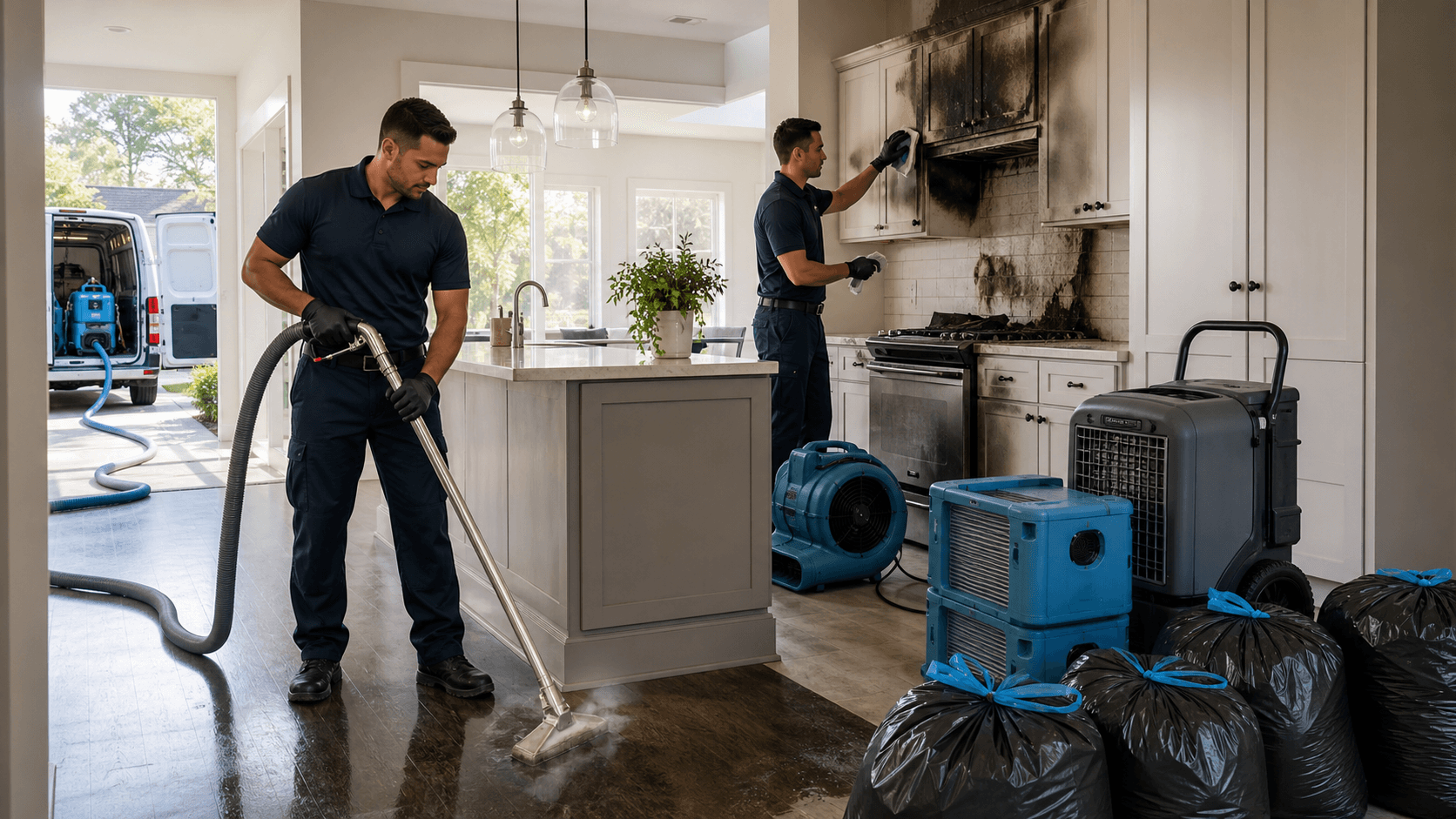
When a professional team arrives, the immediate focus is stabilizing the property to prevent further damage. That starts with securing openings and controlling the indoor environment.
Typical first-day professional steps include:
- Board-up and tarp-over services to cover broken windows, damaged doors, and roof openings, reducing the risk of weather damage or unauthorized entry
- Water extraction using pumps and powerful vacuums to remove standing water from floors, carpeting, and cavities
- Structural drying with industrial dehumidifiers, air movers, and moisture meters to bring materials back to safe moisture levels and help prevent mold growth
Smoke and soot control also begins right away. Trained technicians may:
- Shut down the HVAC system to stop smoke and soot from circulating
- Install air filtration devices with HEPA filters to capture fine particles from the air
- Use specialized HEPA vacuums on surfaces to lift loose soot without forcing it deeper
- Apply initial odor counteractants to start reducing smoke smells before detailed cleaning
Because we are IICRC certified through the Institute of Inspection Cleaning and Restoration Certification and hold the Clean Trust Certification, and because our technicians are all certified and licensed, we follow industry standards for safety, cleaning, and restoration at each step.
What You Can Safely Do in the First Day
While you should leave the heavy cleaning and structural work to professionals, there are small, low-risk actions you can take to help protect your property and belongings if conditions are safe and you have been cleared to enter.
Helpful first-day tasks include:
- Slightly opening windows for ventilation when the weather permits and only if doing so does not spread soot into clean areas
- Placing clean towels or sheets over high-use surfaces like countertops and tabletops to reduce additional soiling
- Separating visibly undamaged items from heavily smoke-damaged ones so professionals can prioritize what needs attention
- Moving pets, young children, and older family members to a clean, safe environment away from the smoke-affected structure
If it is safe and easy to access, you can also:
- Gather essential documents, identification, and financial records into a secure container
- Start a written list or basic inventory of high-value items for your insurance claim
There are also several tasks you should deliberately avoid:
- Do not scrub walls, cabinets, or woodwork, since the wrong technique or cleaner can set soot stains permanently
- Do not launder heavily smoke-damaged clothing or fabrics in a standard washing machine, which can spread odor and residues
- Do not apply consumer-grade cleaners or deodorizers to delicate surfaces like artwork, antiques, or electronics
How Professional Cleaning and Restoration Move Forward
After the initial 24 hours, the work shifts from emergency stabilization to detailed cleaning and restoration. A professional team will walk through the property with you, document conditions, and create a customized plan that addresses structure, contents, and indoor air quality.
That plan may include:
- Detailed inspection of structural components, including framing, subfloors, and insulation
- Structural cleaning to remove soot from walls, ceilings, trim, and built-in cabinets
- Contents cleaning for salvageable items, using specialized methods for different materials
- Carpet and upholstery cleaning that follows Carpet and Rug Institute Seal of Approval standards
Advanced odor removal is another key stage. Fire smoke can penetrate drywall, insulation, and structural cavities, so professionals use industry-approved equipment and techniques to neutralize odors at the source, not just cover them with fragrances.
With a long-established, family-owned, IICRC-certified team handling disaster restoration in Long Grove and the surrounding suburbs, and with Clean Trust Certification and Carpet and Rug Institute Seal of Approval recognition, you get continuity from the first emergency visit through the final cleaning and repairs. Clear communication about timelines and expectations helps you know what is happening in each phase so you can plan your next steps.
Regaining Peace of Mind After a Fire
Fast, informed action in the first 24 hours after a fire has a lasting impact on how well your home or business recovers. Taking safety seriously, documenting damage carefully, and bringing in certified professionals quickly can limit long-term damage, control costs, and reduce disruption for your household or company.
At GreenStar HomePro, our licensed and insured, IICRC-certified (Institute of Inspection Cleaning and Restoration Certification) technicians have spent more than 50 years and three generations helping people in Long Grove and across the Chicago area restore safety, comfort, and cleanliness after fire, smoke, water, and mold events. As a family-owned and operated company for more than 50 years and three generations, and with all our technicians certified and licensed, we provide restoration services that meet rigorous industry standards. With the right steps in those first hours and a trusted restoration partner by your side, you can move from crisis toward a clean, healthy space again.
Restore Your Home With Trusted Local Experts Today
If your property has been damaged by water, fire, or storms, we are ready to help you recover quickly and safely. At GreenStar HomePro, our team provides proven disaster restoration in Long Grove tailored to the specific conditions in your home. We respond quickly, communicate clearly, and guide you through every step so you are never left guessing about what comes next. To schedule service or request an assessment, simply contact us today.